Guide · ADA Title II
ADA Title II exceptions explained: archived content, old PDFs and more
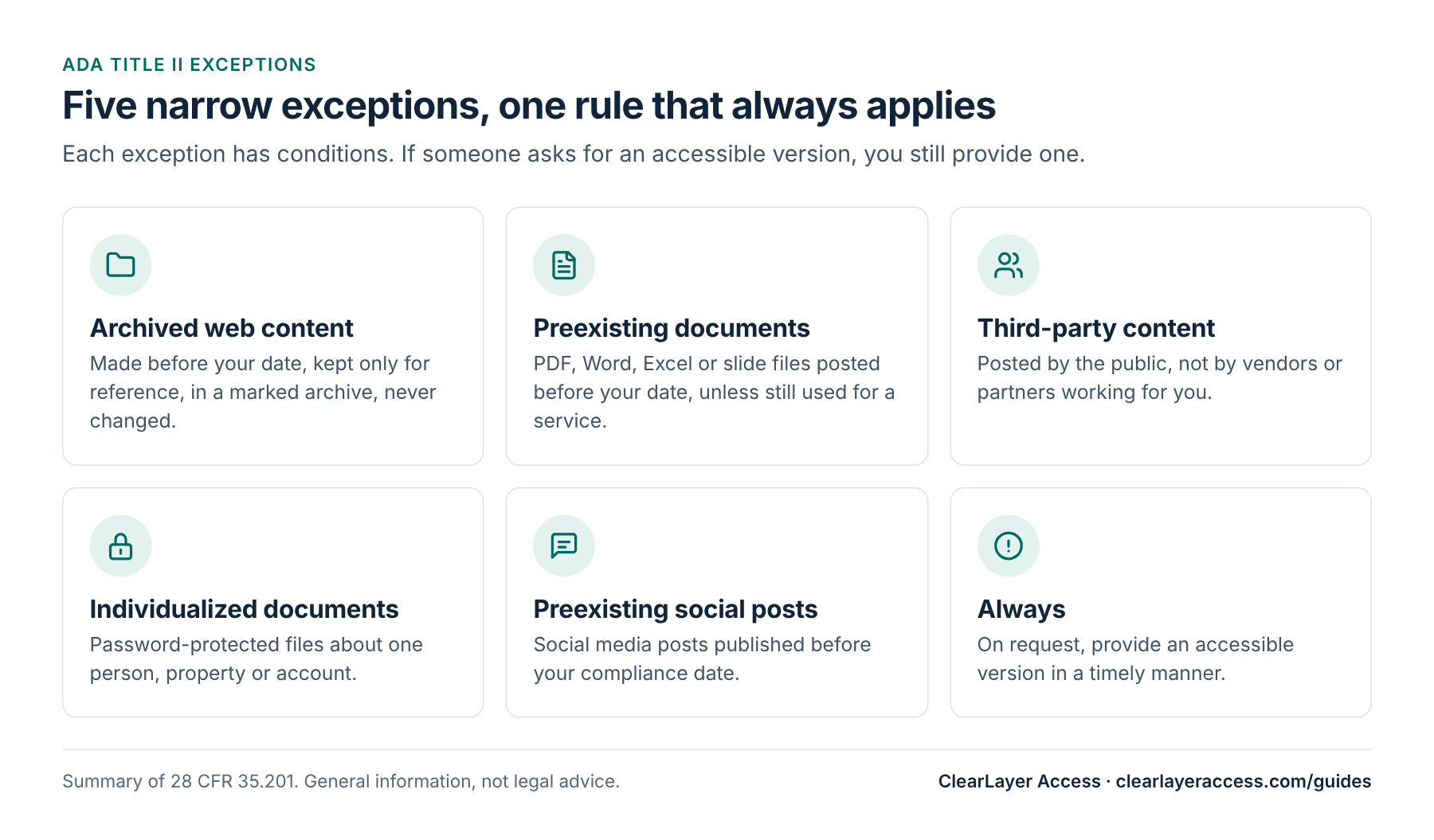
The web rule has five narrow exceptions. Each comes with conditions, and none of them removes your duty to provide an accessible version when someone asks.
The short answer
The DOJ web rule under Title II requires state and local governments to make web content and mobile apps meet WCAG 2.1 Level AA, by April 26, 2027 for entities of 50,000 or more and by April 26, 2028 for smaller entities and special districts (interim final rule, April 20, 2026). The rule lists five exceptions in 28 CFR 35.201:
- Archived web content
- Preexisting conventional electronic documents (PDF, word processing, presentation and spreadsheet files)
- Content posted by third parties
- Individualized, password-protected documents
- Preexisting social media posts
Every exception has conditions, and all of them are narrower than they first sound. Whether a specific file qualifies is a legal question for your attorney.
Archived web content
This exception covers old material kept for history or records, such as past meeting packets. All four conditions must be true:
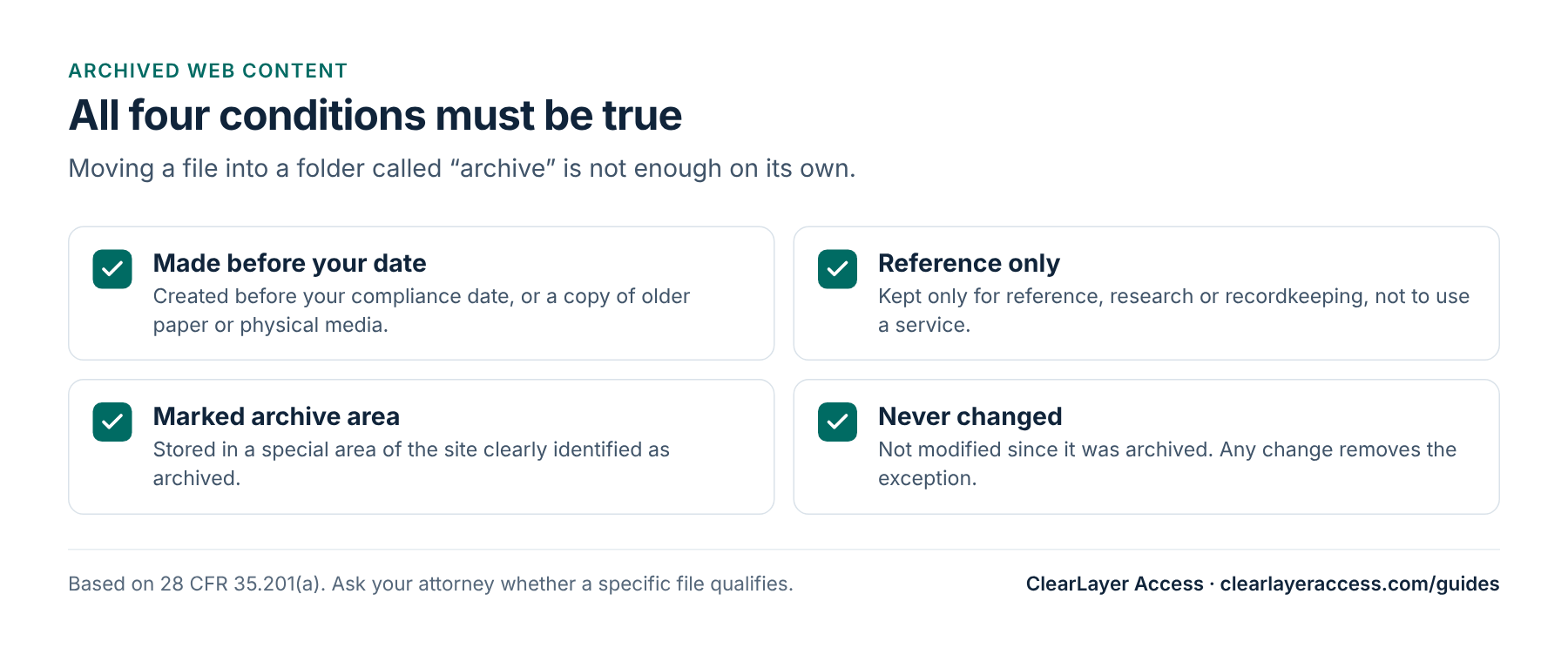
Two practical points. First, a folder named “archive” does not create the exception by itself; the content must also be old, used only for reference and unchanged. Second, if you update an archived file, even to fix a typo, it no longer qualifies.
Older PDFs and documents
Preexisting conventional electronic documents are PDF, word processing, presentation and spreadsheet files that were available on your website or app before your compliance date. They are excepted unless people currently use them to apply for, gain access to, or take part in your services, programs or activities.
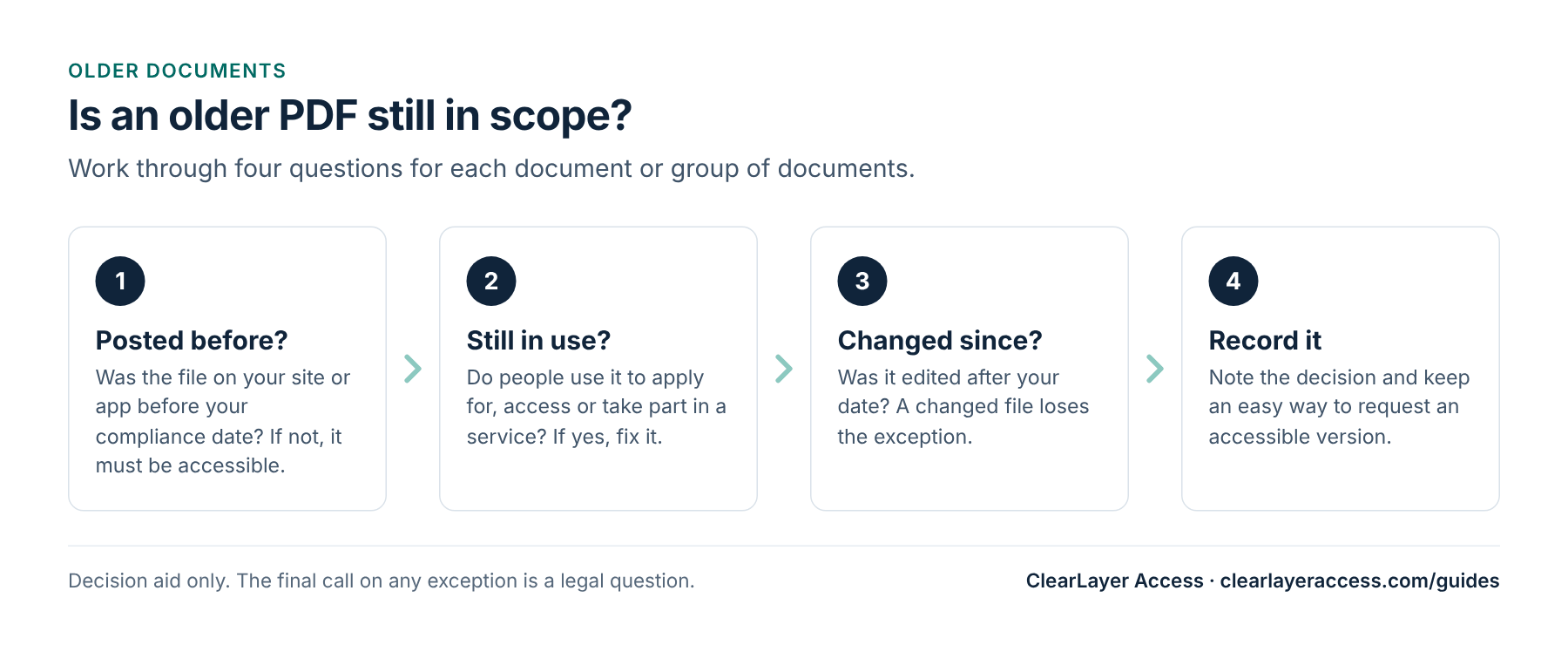
So an old date is not an automatic pass. A 2019 permit application that residents still download and submit is in use and needs to be accessible. A 2019 budget kept only for reference may qualify. Retiring outdated files from your public pages can be sensible, but follow your records retention schedule: removing a file from the website is not the same as destroying a record.
Third-party content
Content posted by members of the public, such as comments on a forum, is excepted. Content posted by someone acting for you under a contract, license or other arrangement is not: a vendor’s agenda portal, payment system or permit tool is still your responsibility. The tools the public uses to post must themselves be accessible.
Individualized, password-protected documents
This covers conventional electronic documents about a specific person, property or account that are password-protected or otherwise secured, such as a utility bill or a tax statement in an online account. Being behind a login is not enough on its own, and the exception never covers documents meant for the general public. Web pages, as opposed to these document files, are still covered.
What still applies
Exceptions are not a reason to ignore people. Under the rest of Title II you must communicate effectively with people with disabilities, so when someone asks for an accessible version of excepted content, provide it in a timely manner. The rule also contains limited defenses for fundamental alteration and undue burden, and a provision on noncompliance with minimal impact on access, but these are narrow and need legal advice before you rely on them.
- Publish a clear way to request an accessible version, with an email address and a response time.
- Keep a short record of what you treated as excepted and why.
- Fix current-use documents first; our ADA Title II PDF guide sets out an order of work.
- Not sure which date applies to you? Use the deadline checker.
Prepared by ClearLayer Access. Published October 31, 2026; rules and references checked against official sources on October 31, 2026. This guide is general information, not legal advice, and following it does not guarantee compliance or any legal outcome.
Frequently asked questions
Not by itself. Archived web content must also be old, kept only for reference, research or recordkeeping, stored in a clearly marked archive area, and unchanged since it was archived.
No. Older documents that people still use to apply for, access or take part in a service, such as a current application form, need to be accessible.
You can retire outdated files from public pages, but follow your records retention schedule. Removing a file from the website is different from destroying a record.
Provide an accessible version in a timely manner. The exceptions do not remove your duty to communicate effectively.
Know what to fix first?
Send a sample of your current-use documents for a free 10-page test, and we will return them tagged with a test report.
Free test open to cities, counties, school districts and special districts.
Preexisting social media posts
Social media posts published before your compliance date are excepted. Posts published on or after that date need to meet the standard, which in practice means alt text for images, captions for videos and descriptive link text.